Photography by Jeroen Noordzij

You have roots in South Africa, grew up in Limburg and live in Maastricht. How has that shaped who you are?
I grew up in the countryside of South Limburg, and I still live there today. From a very young age, I was exposed to producing our own food. That taught me that good-quality food on your plate also, quite literally, means making sacrifices. It gives you a special bond with vital food, but also with life itself.
On top of that, I was lucky to learn a lot about rhythm and regularity from my father early on. To stay physically and mentally fit, he had a morning routine: running, morning exercises, push-ups. So an awareness of nutrition and movement was instilled in me early. At some point I went on to study Nutrition and Movement Sciences, and that’s where my journey began.
Your work revolves around the long term, around consciously investing in yourself. How does that philosophy translate into the choices you make every day?
What you learn as you get older is that everything is transient, including yourself. That’s why I try to keep my health as good as possible for as long as possible. My day starts with self-care, with a fixed rhythm: getting up around the same time every day, walking, moving and then eating. Then there’s self-work: working on yourself. That’s something people often overlook. We want to achieve all kinds of things, and mostly we ask: tell me what to do. We never ask ourselves whether there are things we do too much. What I call undoing: doing less. That brings me to rest. Rest is recovery, and recovery is growth.


You coach people who think consciously about how they age. When is someone truly serious about it, in your view?
The people who come to me are often already trying to do a lot of things right, but can’t sustain it. Usually they already know what they want and which dials need turning. But think of those dials as the lock on a safe: they don’t know exactly what the code is or which way to turn them. That’s where I help. Health is a skill, not an end goal. Keeping your biorhythm, food, movement, rest and undoing in balance, even with a busy schedule or while travelling: that takes practice. Not by reading about it, and not by asking ChatGPT for a meal plan either. But by actually doing it.
When we dig deeper into why someone wants to get fit, I often hear: I don’t feel attractive anymore. Or: I’m setting the wrong example for my children. That gives us a starting point for the self-work, and then we face the painful confrontation: who are you, who were you, where does this come from and who do you want to become?

“Form follows function. And when the function is right, the form looks good too.”
Clothing and health seem like two separate worlds. How do you see the role of appearance in how you feel and come across?
The role of appearance, and how you come across to others, is fundamental to wellbeing and to how you feel about yourself. When someone feels good in their own skin, it shows.
We live in a time when being proud of your appearance is sometimes frowned upon. I don’t entirely agree with that. I’m one of the most down-to-earth people you’ll meet, but I really enjoy looking good. Don’t get me wrong: I love walking around in sweatpants. But when I look the way I do today, I feel strengthened, powerful, good-looking.
It’s not my goal to have the best body. The way I look is a result of the care I give myself. Form follows function. And when the function is right, the form looks good too. You only get one chance to make a first impression. But it doesn’t start with appearance. It starts on the inside: taking care of yourself, working on yourself. What you see is a reflection of how you treat yourself.

If you look at your own wardrobe, what does it say about who you are?
My wardrobe says that I love freedom, movement and individuality. Freedom and movement are closely linked; that’s why I also love sweatpants. But my ‘normal’ clothes need a certain freedom of movement too. When I go to a wedding, I want to be able to bust my moves in my suit all day long.
Individuality is more of a stylistic thing. I’m quite a creative, if I may say so. I am not your average scientist. I’ve wanted to express that creativity from a young age, including in the way I dress. I always wanted to be different. Details matter a lot in what I wear. My style is unique, but always subtle. Never loud: you can tell there’s something special going on, but only on closer inspection do you notice the details.
What mattered to you when designing the outfits together with your tailor?
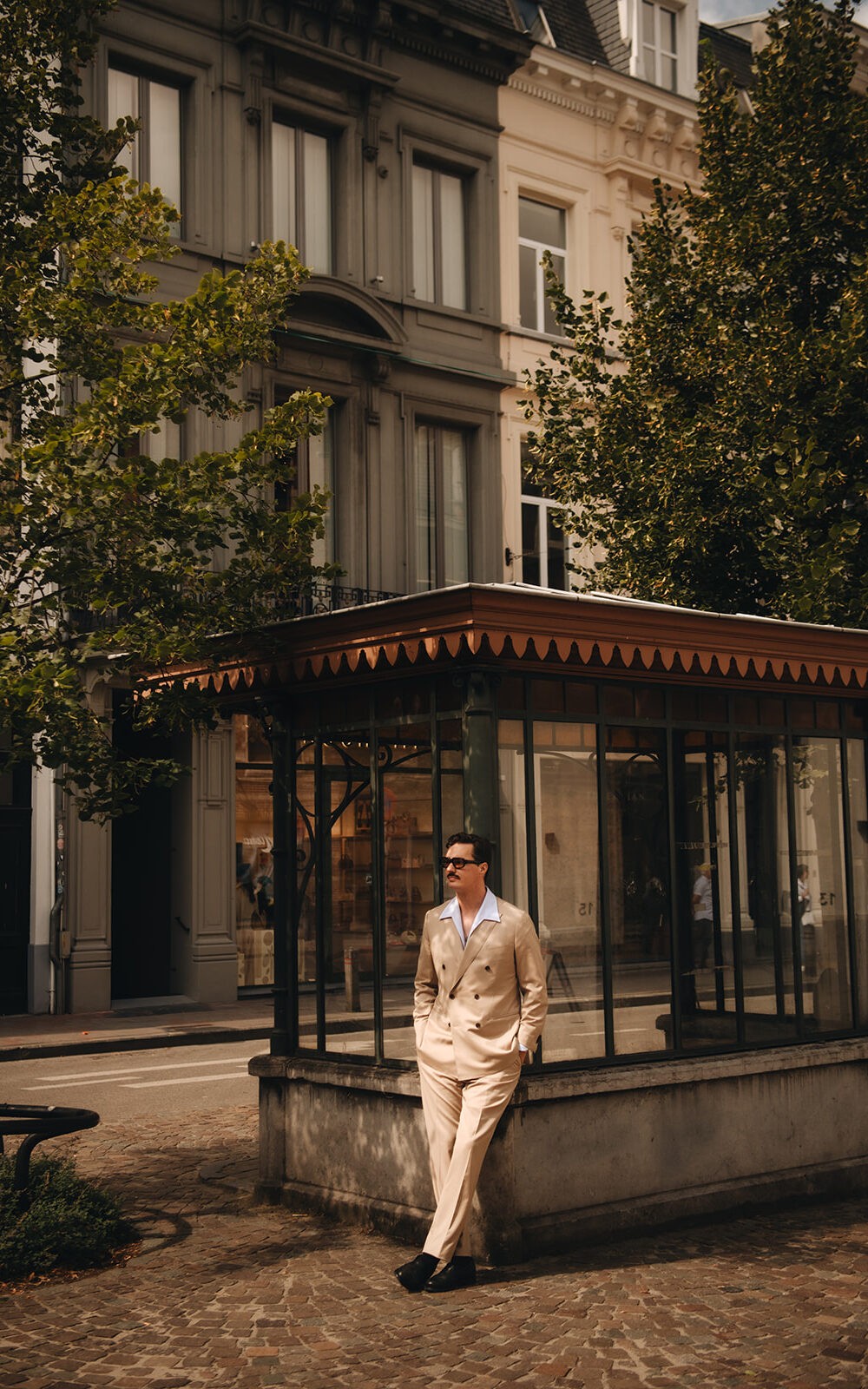
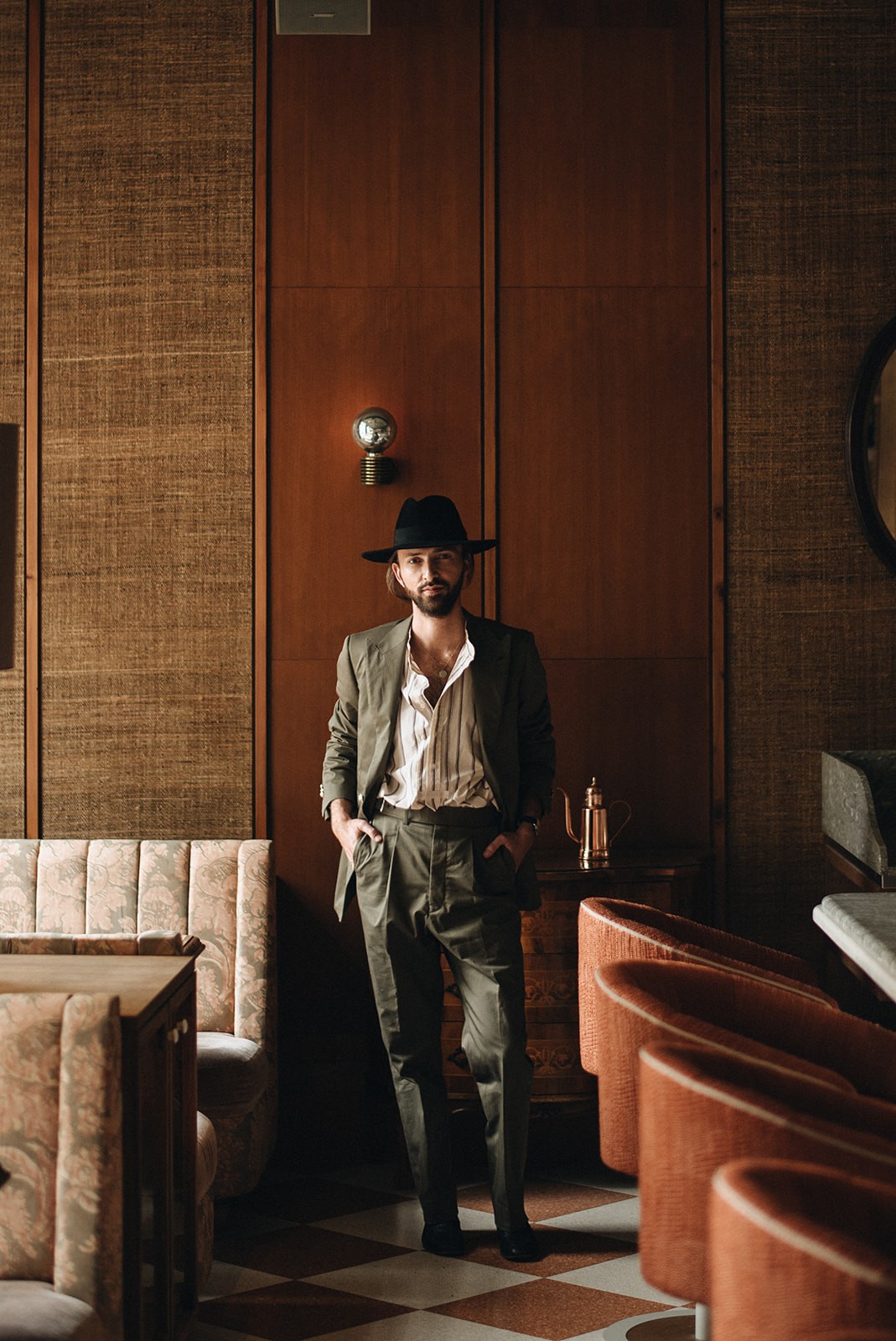
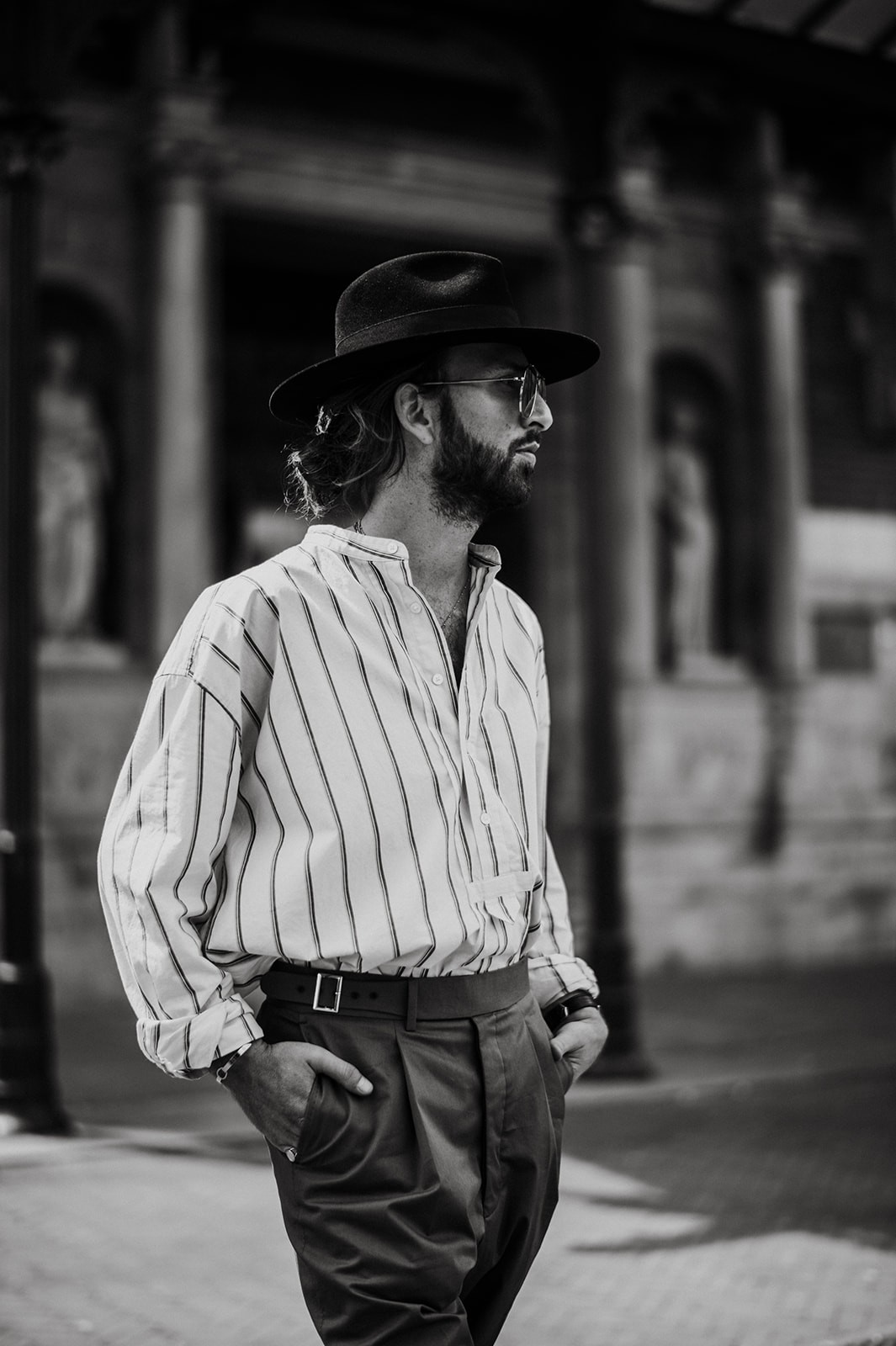
The first thing you notice in the outfits is the freedom of movement: it’s a wider fit. The trousers have a high waistband, which frees up your hips and gives you a lot of room around the pelvis. You sit very comfortably in a chair, and I can even sit on the floor in this suit. The same goes for the jacket: it fits generously and doesn’t feel restrictive at all.
For the colours, I knew I wanted something brown. In my private life I wear a lot of black and navy, which is actually quite boring. As for the fabric, I knew from the start that I want to be able to feel the suit. It shouldn’t be too flimsy or too light. One fabric is fairly heavy for its texture, and it feels great. The other is a bit woollier, but not too heavy; it gives a little more volume.


Tailoring your wardrobe and tailoring your health both call for an honest conversation about who you are and what you need. How did you experience that at Michael & Giso?
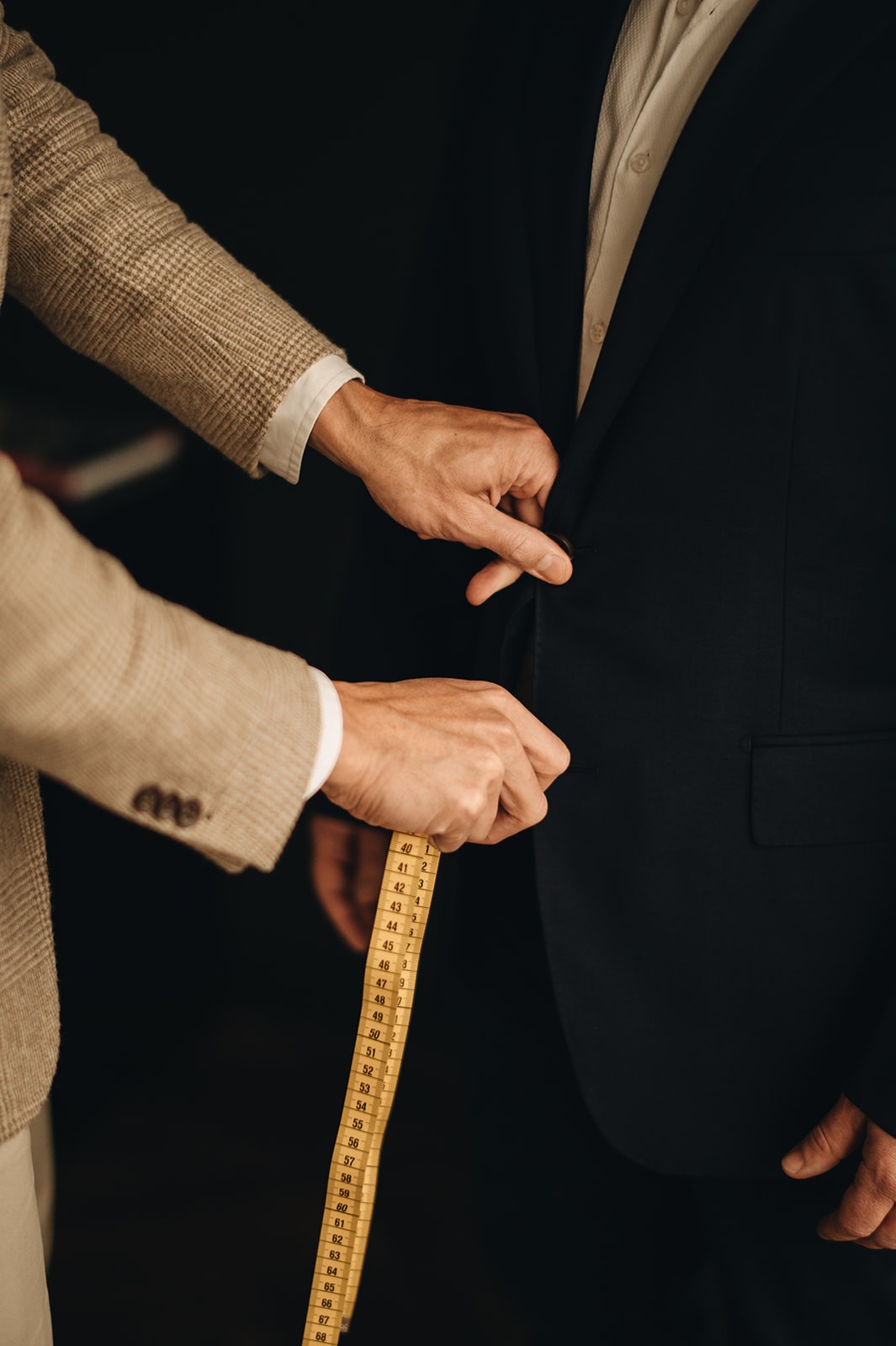
Working towards a suit like this is quite a process. I compare it to my own practice: it starts with an intake, because you want to understand what the client needs. In this case, Mike was in my chair and I was the client. I love it when the tables are turned: then I can sit back and let myself be advised. Of course, sometimes I’ll say: I’d like that one differently after all. There’s room for that, because it’s not his suit, it’s my suit.
As soon as you walk out after the first appointment, you’d ideally like everything delivered the next day. But that’s not how it works. Good things take time; I always tell my clients that too. It’s the journey that makes it special, and that’s exactly why it turned out better than I expected.